
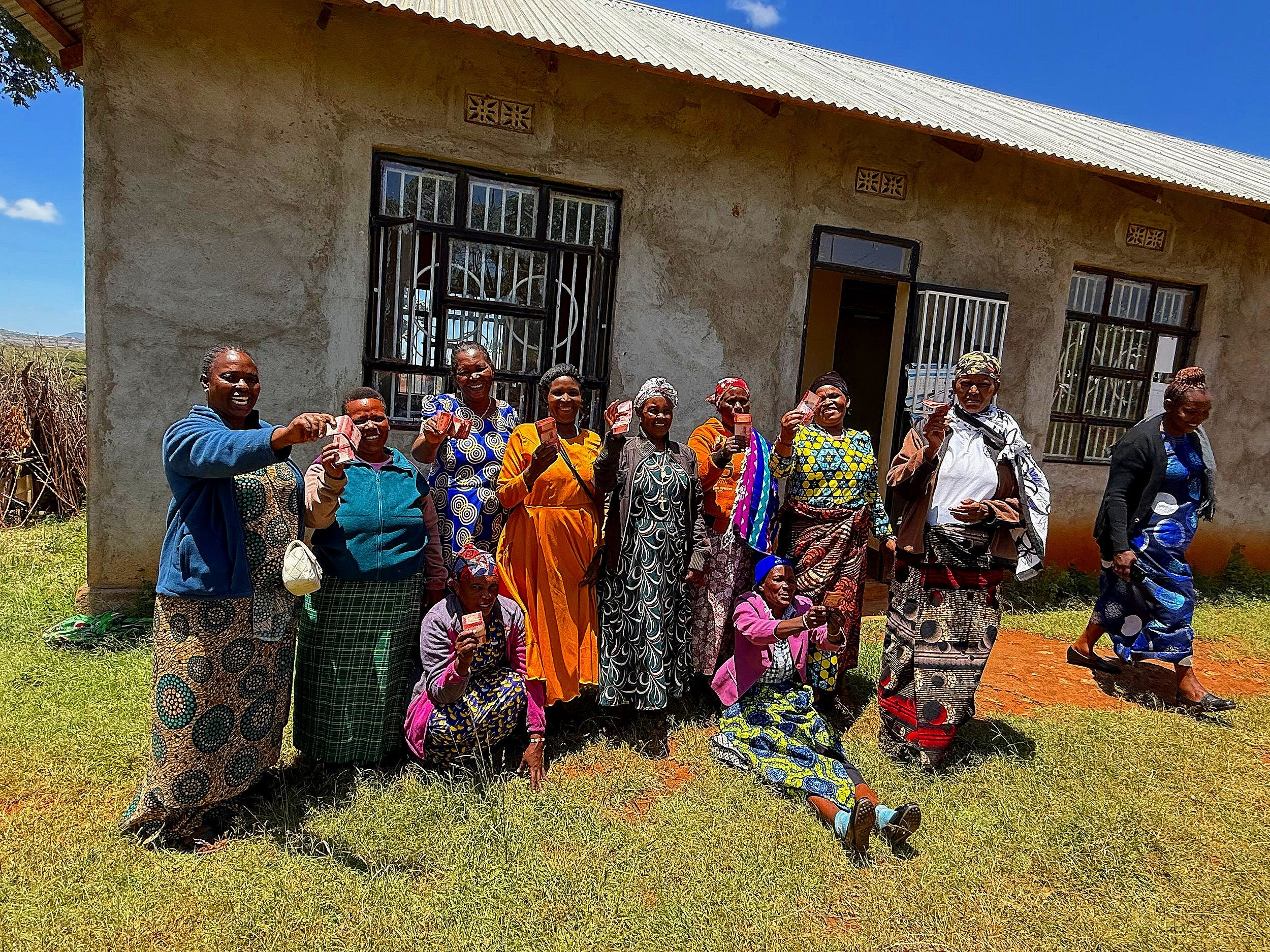
MICROLOAN PROGRAM
In 2012 Maasai Partners established a Microfinance Loan Program to present women with a way out of their limited economic opportunities and empower them to become more financially independent. This original program continues to operate, and is now known as Ganako Women Community Organization (GWOCO). Recently, we started sponsoring loan groups through a new Maasai organization known as Resilient Communities Africa Foundation (ReCAF), under a model they developed that is better adapted for isolated rural settings.
Microfinance loans available to women in these poverty-stricken areas help to stabilize incomes and improve living standards. To date, more than 1,000 women have launched successful businesses and accumulated savings through this popular and effective loan program.
After years of intense collaboration between Maasai Partners, WMI and local loan leaders, GWOCO is now functioning completely independently. Revenue generated through interest helps to run the program and is reinvested into the community via community projects. These community projects have brought women who used to reside in the background into the forefront as leaders of their community.
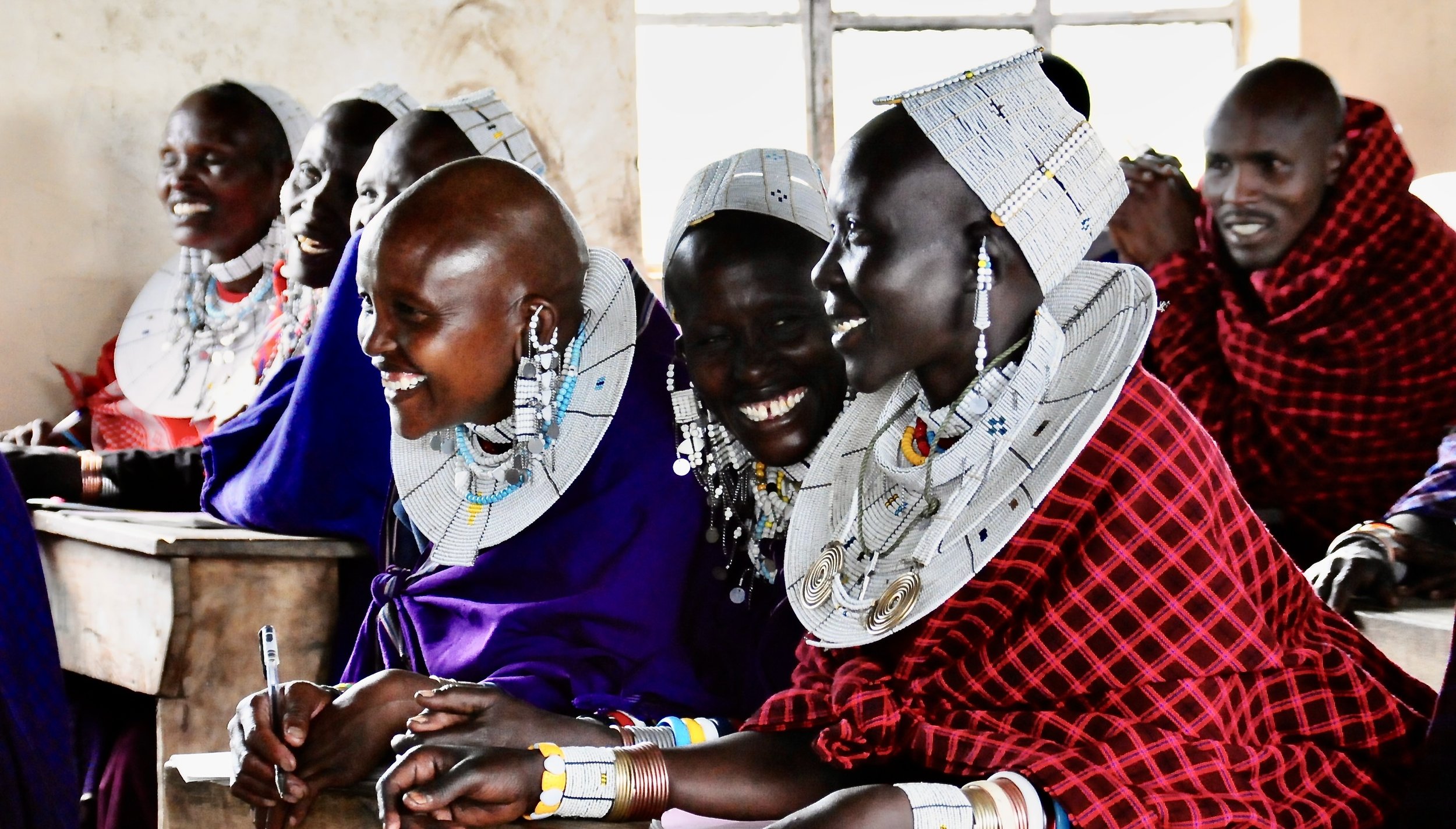
Business training is interactive and includes role-playing, which fully engages the participants
Lacking Funds For Basic Family Needs
Maasai women living in remote areas like Alailelai have limited access to the outside world. Maasai do not have an active cash economy and subsistence agriculture is not permitted within the conservation area where they live. As a result, they lack the money necessary to provide food and medical care for their families’ survival. It is difficult to meet basic family needs.
Women living in Karatu district are somewhat more fortunate, with many market opportunities and small subsistence farms. Compared to Alailelai, Karatu district has a stronger cash economy, as that area is more integrated into the country’s overall development. With that said, Karatu’s inhabitants still have a very low average daily income.
Prior to the loan program, lack of access to capital limited women’s participation in the opportunities offered by their local markets. Now, with the Maasai Partners/WMI loan program in Karatu, women have seized the opportunity to improve their earning potential and living standards. Microfinance offers confidence and financial independence for hundreds of women. This program involves an intensive two-day training to impart business techniques and strategies for women with a variety of interests to generate group loans.
Look for personal stories of loan recipients throughout our blog posts.

The loan training breaks down the fundamentals of running a business and teaches about things like budgeting
How Our Microloan Program Works
Requiring no collateral, loan groups of 10 to 25 borrowers receive $100-500 per person, with a 10-percent flat interest rate. After a six-month term, successful borrowers are eligible for follow-up loans and increased amounts. Built into the program is a requirement that they save at least 10 percent of the loan in order to receive a follow-up loan. Most women will tell you that this is one of their favorite parts of the loan program—it forces them to have savings, which can otherwise be difficult in a culture where you are expected to share anything extra you may have.
After 24 months, borrowers transition to self sustainability through group bank loans. Freed-up loan money is then used to fund new borrowers. Loan interest generates funds for administrative costs and business skills training for the new borrowers, enabling them to run the program themselves.
That money will be used again and again for new businesses as the loans are repaid, providing help when it is most needed.

Learning about budgets helps to make businesses successful
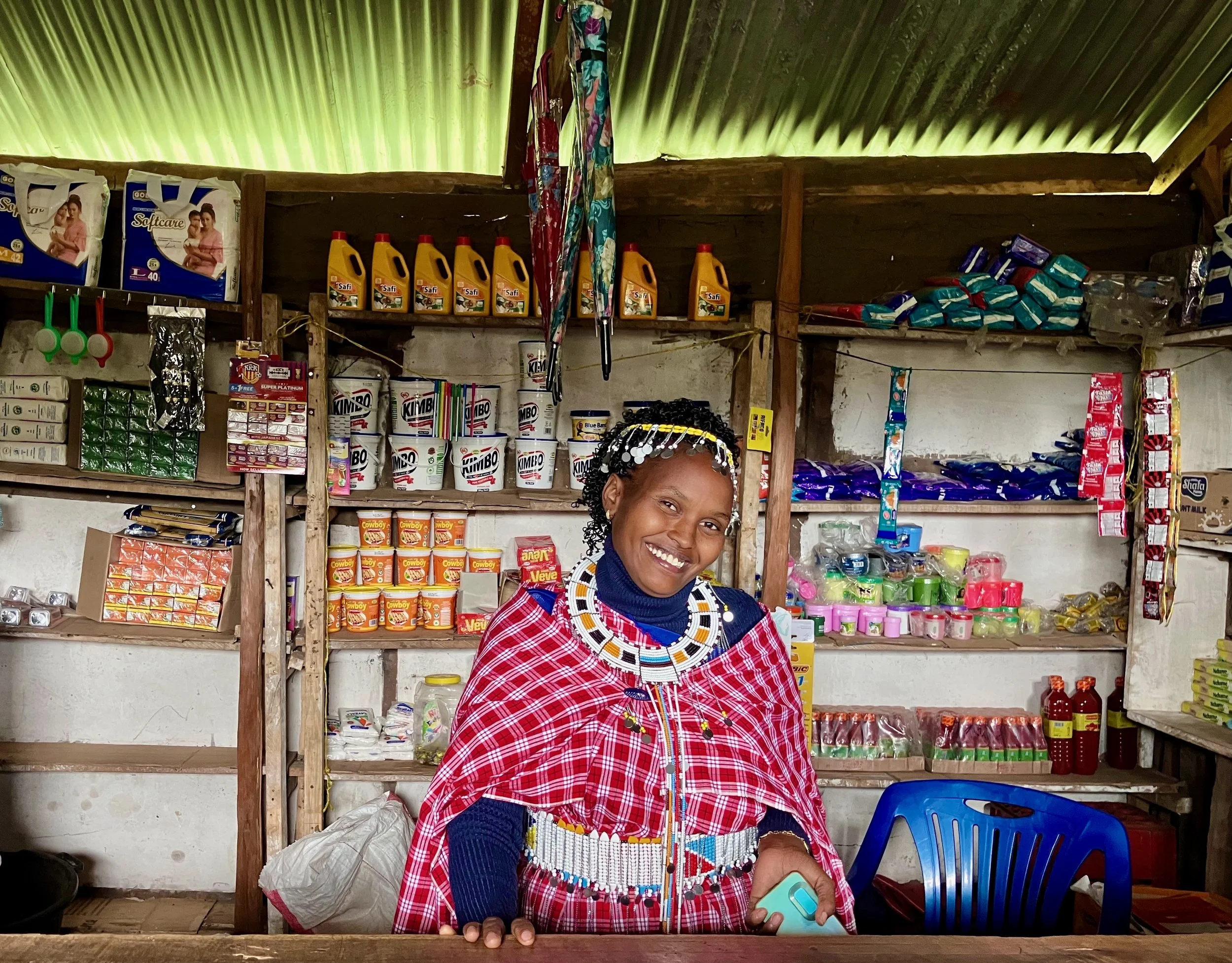
Maria in her shop in Alchaniomelok, where she sets an example for the women in her loan groups
Interview with Maria Mirumu, ReCAF Co-Founder
1. You don’t have any desire to move to town? How come?
No, I don’t have any desire to move to town. My heart is with the women in my community, and I want to stay close to them while also taking care of my family. Living in Alchaniomelok allows me to understand their struggles firsthand and be available when they need support. While I sometimes travel to Karatu and Arusha for work, my home and purpose remain in the village.
2. How do you choose the women in your loan program?
The women in our loan program are selected based on their need, commitment, and willingness to work together. We focus on those who show responsibility and have a clear vision for how they will use and repay the loan. We also consider women who may not have access to formal financial institutions but are eager to improve their livelihoods through small businesses, livestock keeping, or other economic activities. We encourage peer accountability, so women who join must be recommended or supported by their group members.
3. How do the women in your village view you? What do you think they might say about you when you aren’t around to hear?
As a young and educated Maasai woman, my community views me very positively. They see me as respectful, friendly, and someone who brings new opportunities without losing our cultural values. The women appreciate that I am one of them, yet I also bring knowledge and connections that help them grow. I believe they would describe me as "supportive," "kind," "inspiring," and "a role model." Some might say, "Maria is a strong leader, but she listens to us like a sister," or "She is educated, but she remains humble and close to her people."
4. What motivated you to first start managing the loan program? Why do you continue to do it, or what motivates you now? Have your reasons changed since the beginning?
At first, I was motivated by the need to empower women financially. I saw how lack of access to credit kept many women dependent and struggling. Over time, my motivation deepened—I realized that financial empowerment also improves women’s confidence, decision-making power, and overall well-being. Now, I continue because I see real change happening. Women are starting businesses, sending their children to school, and gaining respect in their households. That keeps me going.
5. How did you meet your husband Kisiaya, who co-founded ReCAF with you? Did marrying him influence your desire (or ability) to manage the loan program? Would you still be doing the same thing if you were unmarried?
I met my husband in Arusha on my way to University. We built connections and family ties in the normal Maasai process of marriage. Marrying him has been a source of support rather than a limitation. He understands my passion and encourages my work. If I were unmarried, I believe I would still be doing the same thing because my commitment to empowering women is personal and deeply rooted in my experiences. However, marriage has given me stability and a partner who supports my vision.
6. Have you ever taken out a loan yourself? Do you receive any money for managing the group? If you had access to a very large loan yourself, what would you do with it?
No, I have never taken a loan from the money given by donors. My role is to manage the loan hub and help women access and repay their loans. However, with the support of my husband, I manage a small business in Alchaniomelok, which serves as an example for other women in the village. I also manage livestock as a source of income. If I had access to a very large loan, I would invest in expanding village loan hubs, ensuring that more women have access to credit and business training. I would also explore sustainable projects like clean energy, water and sanitation, and education initiatives that benefit both community and the environment.
7. Do you ever feel as if you don’t fit in with your peers in the village because of your status and fluency in English?
Sometimes, yes. Education and exposure to different experiences have given me a different way of thinking, and that can make me stand out. Many people admire it, while a few find it strange. But I always try to stay connected to my community, speak my local language, and respect our traditions. At the end of the day, what matters is not how fluent I am in English, but how much I impact the lives of the women around me.
8. What do you think motivated your parents to send you to the University of Dar for continuing education?
My parents wanted me to have opportunities that they never had. They saw education as a way for me to contribute meaningfully to my community and be independent. Even though it was uncommon for Maasai girls to go that far in school, they believed in my potential. They also understood that an educated daughter could uplift an entire family and even the wider community. Their sacrifice and vision shaped who I am today.