
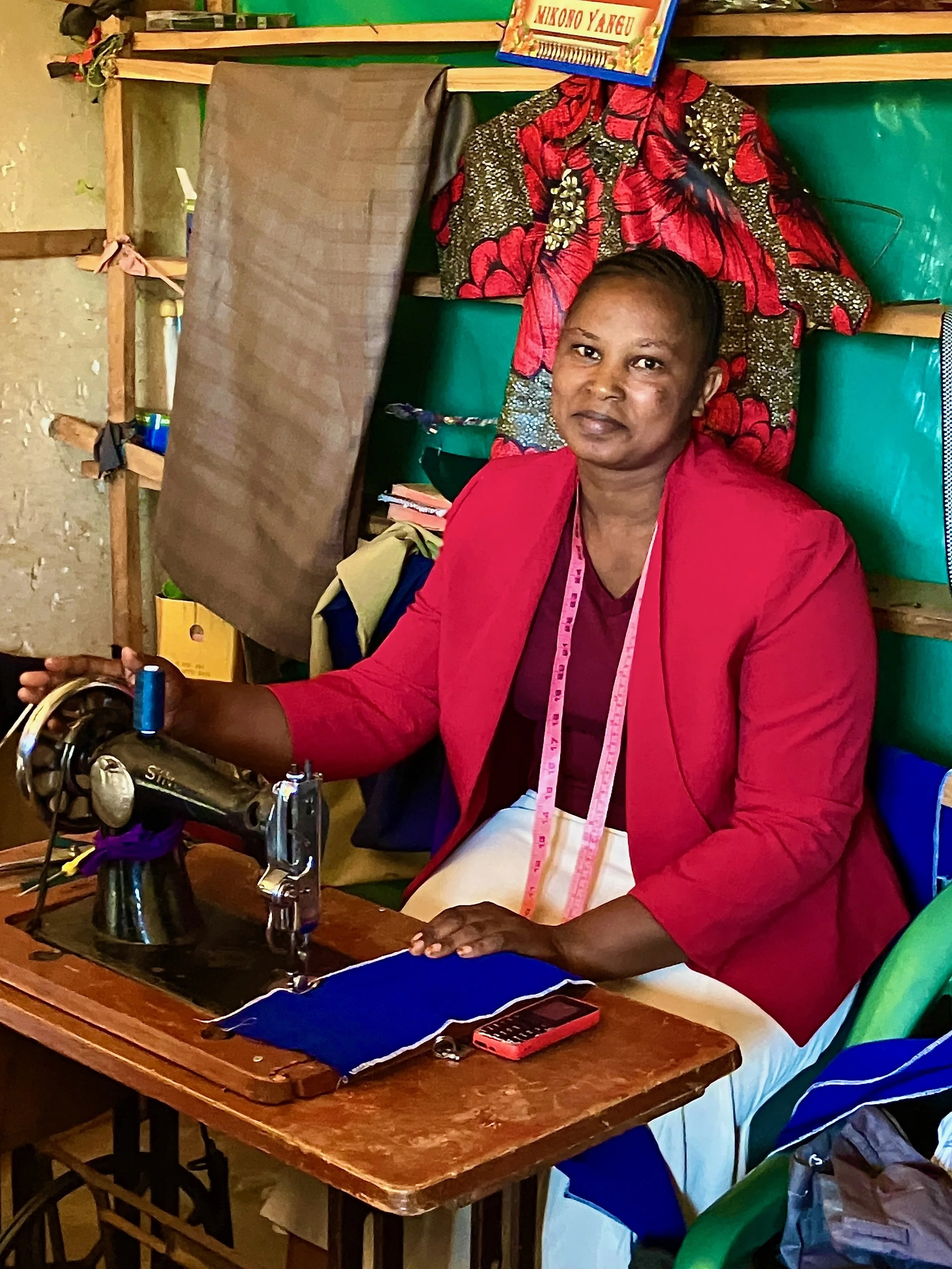
Lindaeli Samweli, owner of Jayuzamu Tailoring School
In the northern Tanzanian district of Karatu, just a few miles from the the Ngorongoro crater, the steady clatter of sewing machines fills Lindaeli Samweli’s workshop. Bolts of vitenge—the vibrant patterned fabric worn across East Africa—are stacked against the wall of Lindaeli’s house. Young women sit positioned around the room at their own sewing machines, following instructions that Lindaeli calls out between stitches. Next door, construction is underway on new classrooms that will one day host more students. On any given morning, Lindaeli is a tailor, a shopkeeper, and a teacher - often all three in the same hour.
In 2018, Lindaeli joined Ganako Women's Community Organization (GWOCO), Maasai Partners’ urban loan program partner in northern Tanzania. GWOCO operates in Endabash, a village in the Karatu district, supported by Maasai Partners and and its long-time partner, Women’s Microfinance Initiative (WMI). By leveraging loans and business training, Lindaeli transformed her small training class into a popular trade school. Today, her business, known as Jayuzamu Tailoring School, has become a major source of practical skills and economic opportunity for young people in Endabash and surrounding villages.
How did such remarkable growth happen in less than a decade? The groundwork for Lindaeli’s tailoring school was laid a year before she joined GWOCO. A skilled local tailor herself, Lindaeli started offering free sewing lessons to interested girls in her village (eventually training over 100 girls). She and her husband saw the potential, and used personal funds to rent a training space and buy supplies, a significant commitment to start a small family business and help girls in their community.
Microloans provided Lindaeli with the financial support and business knowledge to improve her operations. Access to low-interest loans helped to cover training space and supply costs, while training by GWOCO in financial literacy, marketing, and business planning gave her the tools to make informed business decisions. Lindaeli eventually introduced a small fee, around $12, which covered an individual student’s entire training program and generated a steady revenue stream to support her own household.
Lindaeli also began to invest in better technology. She bought an overlock sewing machine which improved the quality and speed of her own clothing production. The new technology also introduced a second source of income. Nearby tailors began to pay a small fee (less than $1) to use her new hi-tech sewing machine for their own orders.
Over time, Lindaeli’s school has also grown in students and square footage. Her living room serves as a classroom for theory lessons, while another room holds the machines for hands-on training. Lindaeli is still focused on expanding. During the COVID-19 pandemic, Lindaeli adapted quickly by shifting production toward face masks. The profits enabled her to purchase a second plot of land next to her home, where two classrooms are currently being built.
Now, Jayuzamu Tailoring School offers an 18-month program at $60 per pupil, with 35 students currently enrolled. Students whose families cannot afford the fee continue training for free, a policy that has remained in place since her doors opened. Graduates who pass both the theory and practical exams receive certificates that have helped many find work in garment factories, while others have used their training to open tailoring businesses of their own.
The ultimate reach of Lindaeli’s work is best illustrated in the independent journeys of her former students, like Lucia and Maria, both of whom received free training when their families could not afford even the small tuition fee.
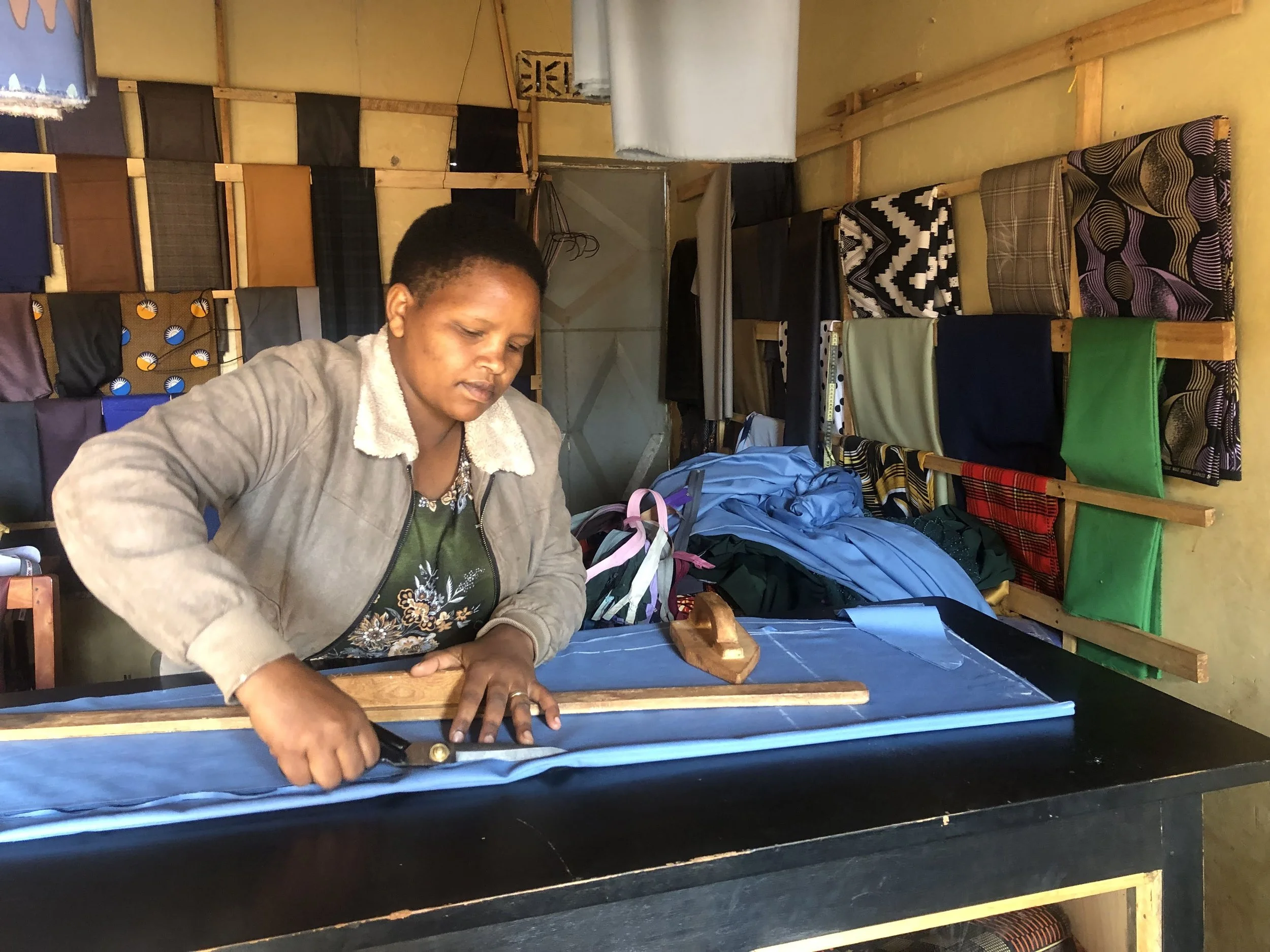
Lucia fulfilling a recent order at her shop
Lucia completed her training at Jayuzamu Training School at age 24. Recognizing her skill and work ethic, Lindaeli hired Lucia to work at her shop. As Lindaeli’s employee, Lucia earned enough money to open her own business just two years after graduating from the training school. Now 31 years old, Lucia runs a thriving tailoring business - the profits cover rent, equipment, and household expenses for her two sons.
Lucia also contributes to a local savings group. Grateful for the free training provided to their daughter, Lucia’s parents showed their appreciation as soon as they were able by contributing funds toward the construction of the school's new building and purchasing a workshop chair for Lindaeli’s trainees. Lindaeli has inspired Lucia to follow in her footsteps - Lucia hopes to teach young people practical skills and contribute to another generation of self-reliant women.
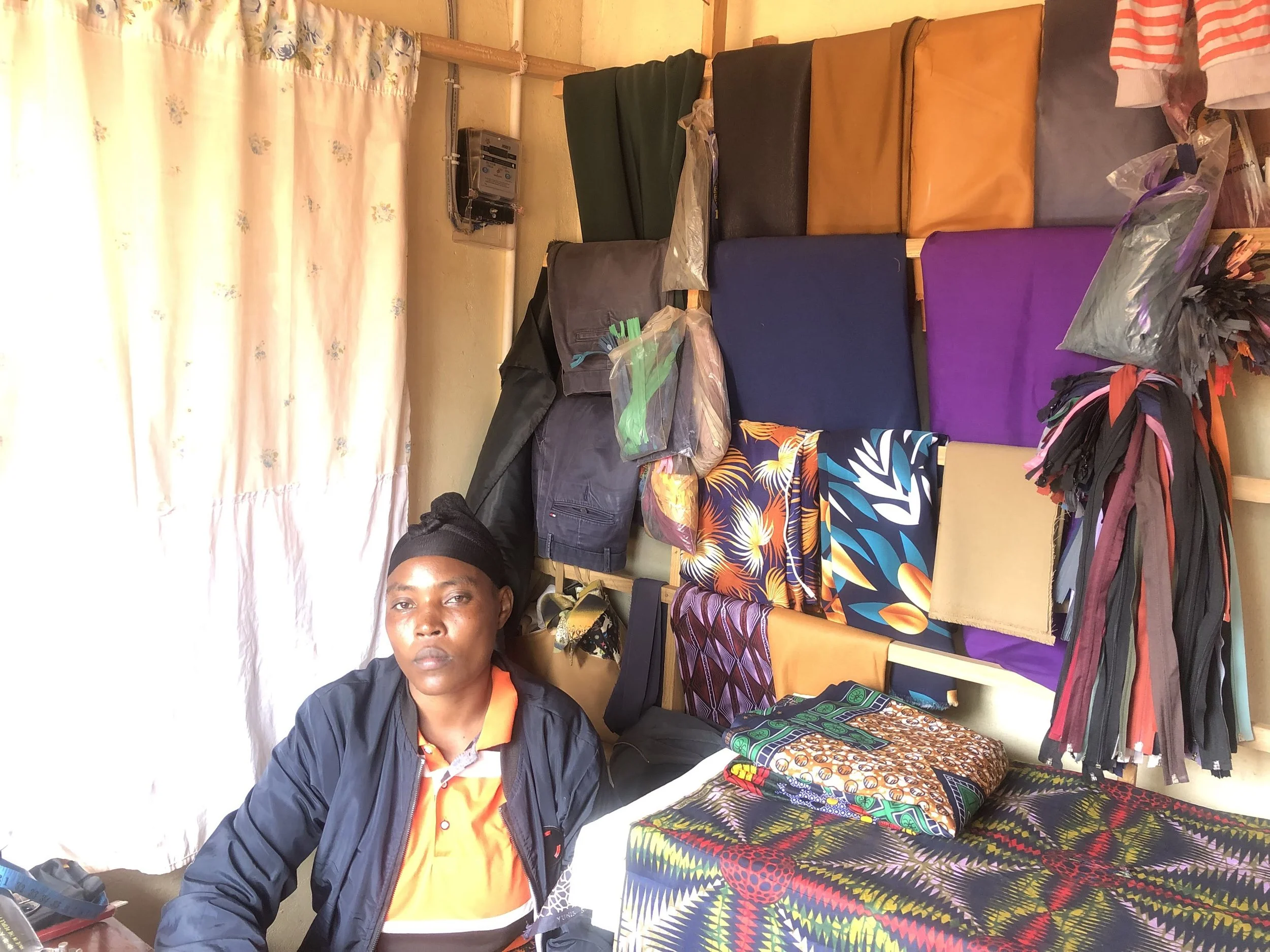
Maria in her shop, with her vitenge fabrics
Maria graduated from Lindaeli’s training school at age 26. Although her family was unable to pay tuition, Maria’s parents supported their daughter’s dream by finding fabrics she could use for her practical lessons. Upon graduating, Maria began working for another tailoring shop. Facing low customer demand, saving money was a challenge for Maria. However, Maria remained patient and committed and finally, five years later, opened her own tailoring business. Though she was able to pay rent for her workspace, Maria still struggled to save enough money to purchase a sewing machine. Staying connected with her former student, Lindaeli lent Maria a machine until she was able to purchase her own. Lindaeli also offers Maria temporary work to fulfill large orders when work is slow at Maria’s shop. With income coming from her own business and her work at Lindaeli’s, Maria has been able to support two children as a single mother.
Lindaeli Samweli’s story illustrates the ripple effect of investing in a rural woman. Support from Maasai Partners, along with WMI, provided Lindaeli with the capital to build a successful business operation, but her success did not end there. By passing on her knowledge, equipment, and resources to women in her community who are not in the loan program, Lindaeli has created a network of women with skills that allow them to support themselves and their families. The women she trains, like Lucia and Maria, become business owners, employers, and mentors themselves, proving that investing in one woman’s vision impacts the lives of so many in the community. We thank everyone who has supported the loan program for making this dream a reality.
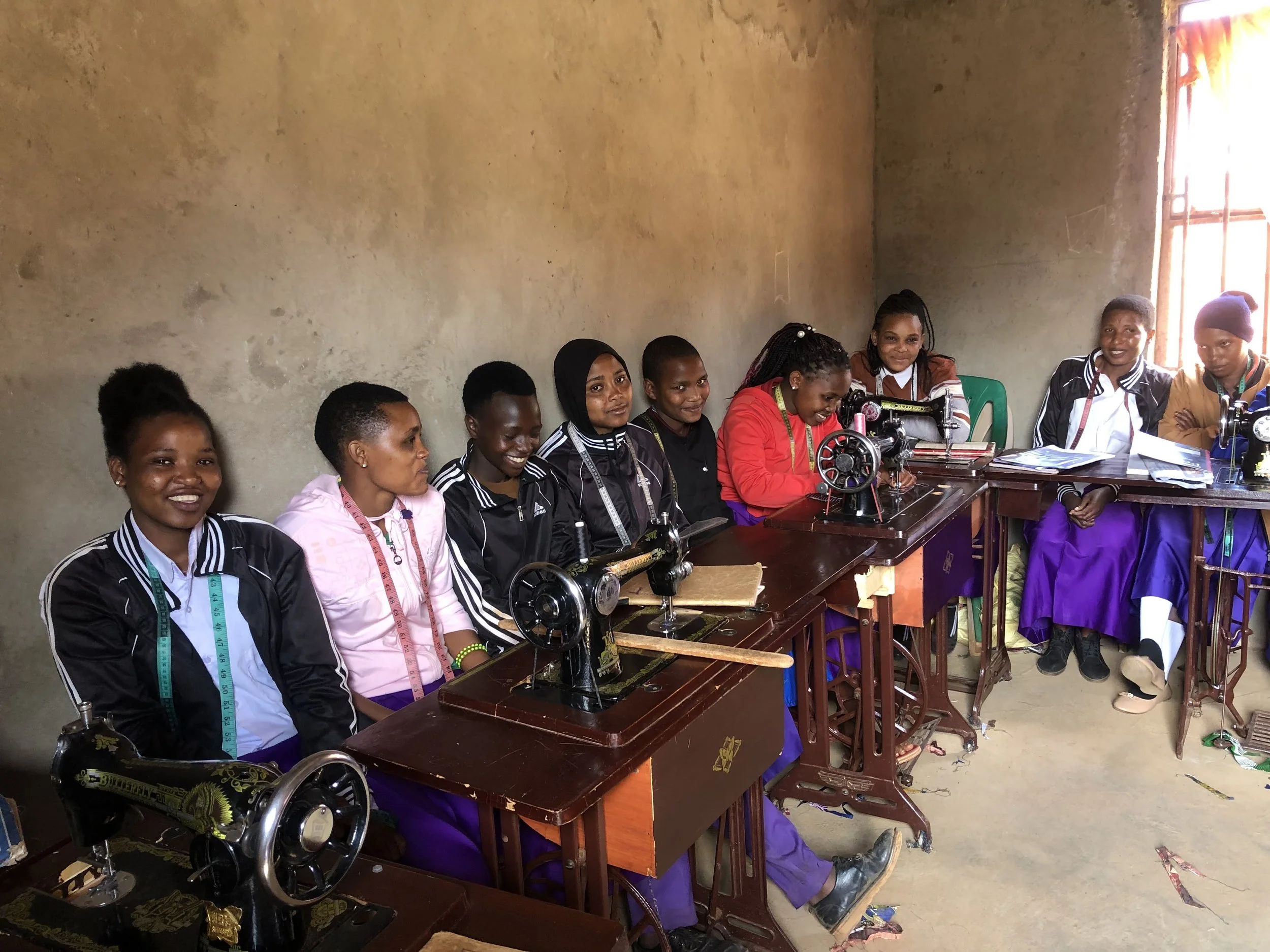
The current cohort of students enrolled in Jayuzamu Tailoring School
Guest column by Miranda Mowrey of Women’s Microfinance Initiative
